"θαλάττῃ ἕπεσθαι πολύποδας αὐτῷ πρὸς τὸ ἱερὸν τοῦ Ποσειδῶνος. ὧν τοῦ μεγίστου λίθον κομίζοντος λαβεῖν τὸν Ἔναλον καὶ ἀναθεῖναι, καὶ τοῦτον Ἔναλον καλοῦμεν."
"'…octopuses followed him through the sea to the shrine of Poseidon; the greatest of them was carrying a stone, which Enalus received and dedicated there — and this we call Enalus.'"
— Plutarch, Septem Sapientium Convivium 201
The city of Poseidonia (Paestum to the Romans) was founded by Sybarite colonists on the Lucanian coast around 600 BCE and named for Poseidon. Three temples remain standing at the site. His image ran through the city's coinage for two centuries.
The presence of the octopus in that coinage is less easily explained.
The bull was Poseidonia's civic animal. The trident was Poseidon's attribute. The dolphin belongs to any seaport. The octopus has no obvious place in Poseidon's iconographic tradition, and no comparable Greek city treated it as a civic or divine symbol. Yet it appears at Poseidonia on the earliest obols, on the principal staters, on the bronze issues, always placed alongside or beneath the god. The coins, read across denominations and a century of shifting obverse types, make two related arguments. A passage in Plutarch, written some six centuries later at Lesbos, provides independent literary evidence for both.
The Obol
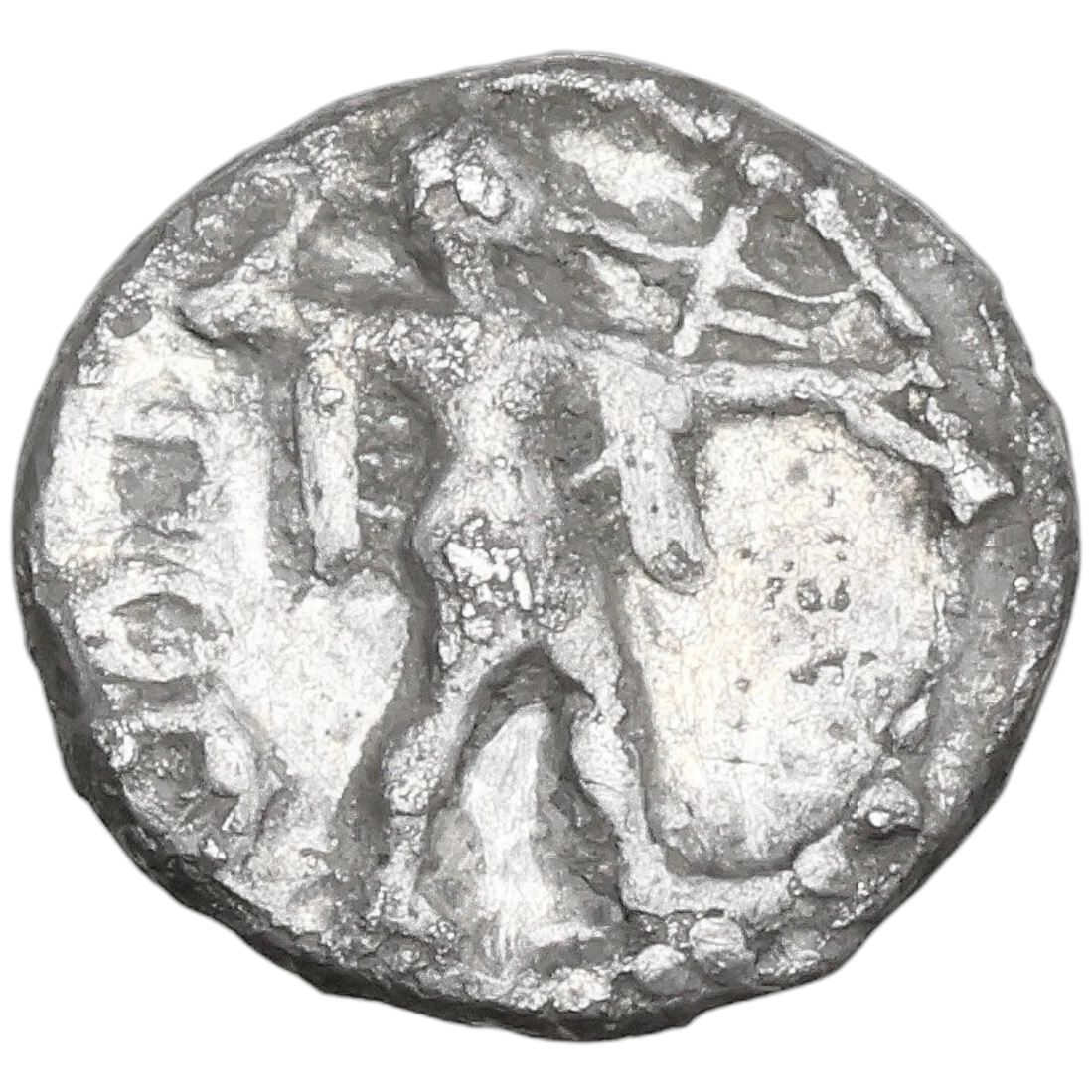
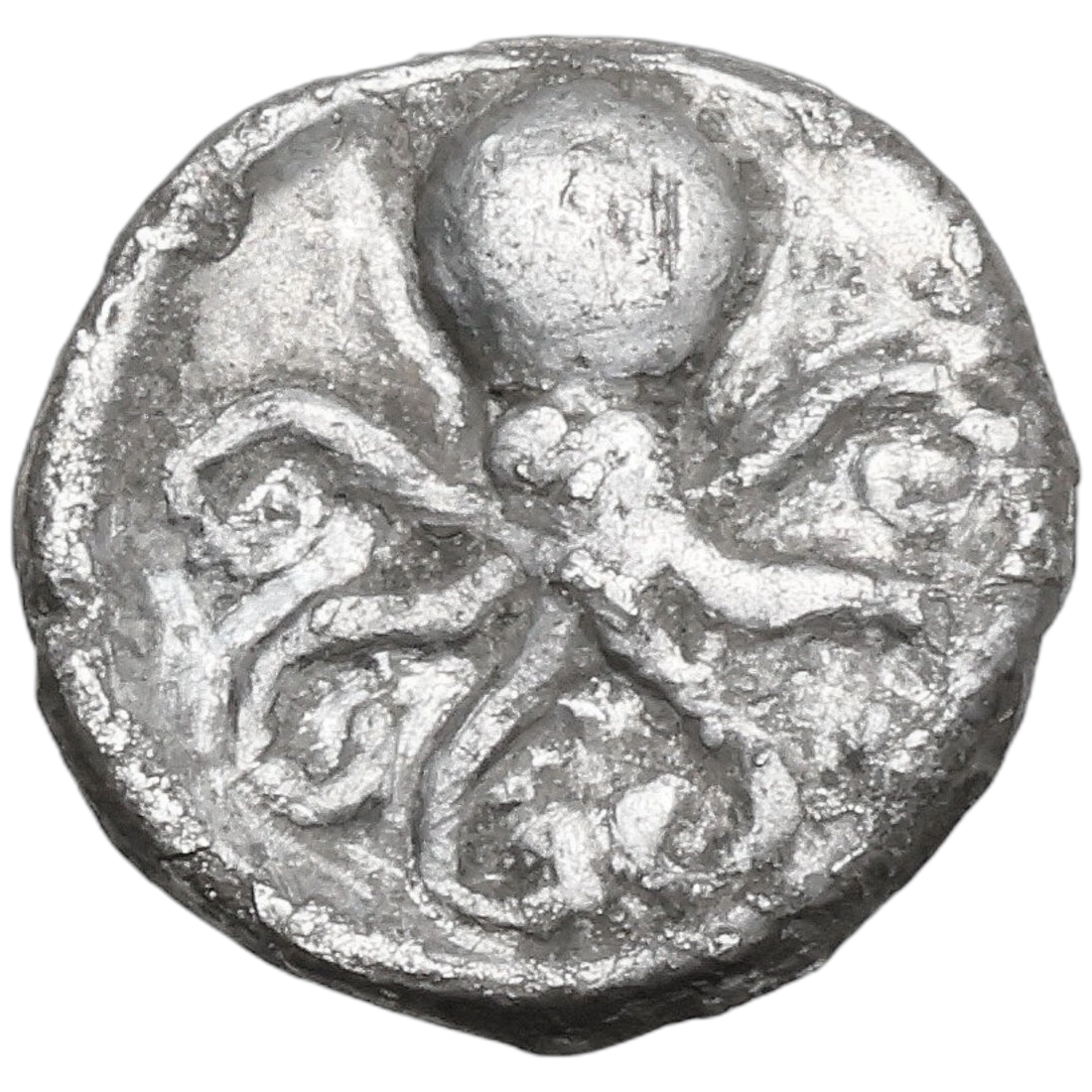
Collection of the author
- Obverse: . Poseidon standing right, preparing to cast trident
- Reverse: Octopus
A silver obol, c. 500–470 BCE. The obverse shows Poseidon with arm raised to throw his trident, the abbreviated ethnic ΠΟΣ beside him. The reverse shows an octopus, and nothing else.
The creature is rendered with six arms rather than eight, a die-engraving simplification repeated on the bronze, but the head settles the identification. Cuttlefish carry a fin running the full length of the body; squid have triangular fins at the posterior; octopus has neither. The depicted head is round, smooth, and finless. The same is true on the bronze at 12 mm and on the stater, where the octopus is compressed between the bull's legs and only two arms are shown.
The Stater
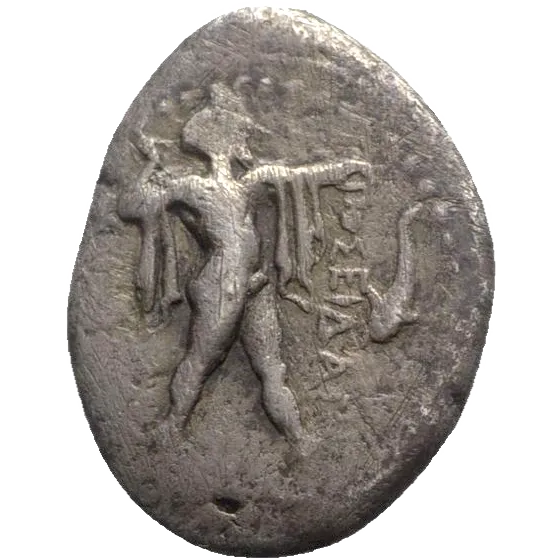
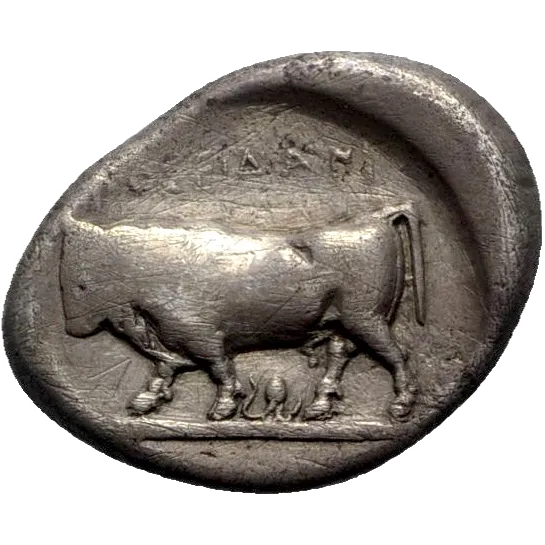
Collection of the author - view coin page
- Obverse: Poseidon, nude but for chlamys draped over both arms, standing right, preparing to cast trident; downwards, dolphin downwards
- Reverse: Bull standing left; octopus between legs; above
A silver stater, c. 410–350 BCE. The bull takes the main reverse position, Poseidonia's primary civic emblem. Between the bull's legs, in the space left by the engraver, is the octopus. In that subordinate position it is considerably smaller than on the obol; only two arms are shown.
The Bronze
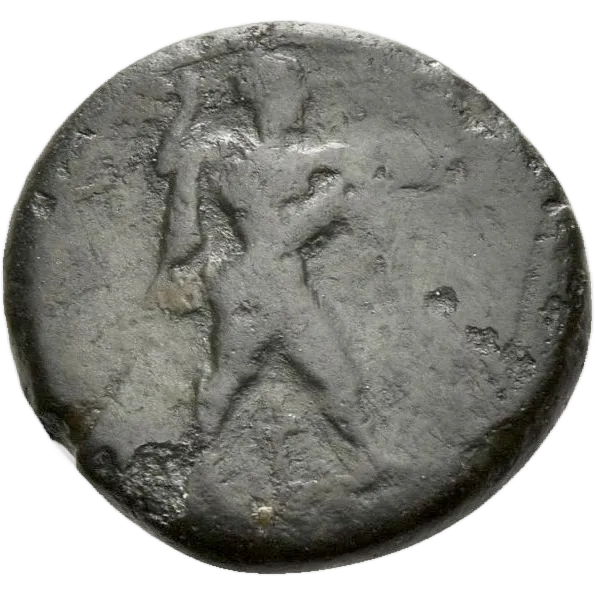
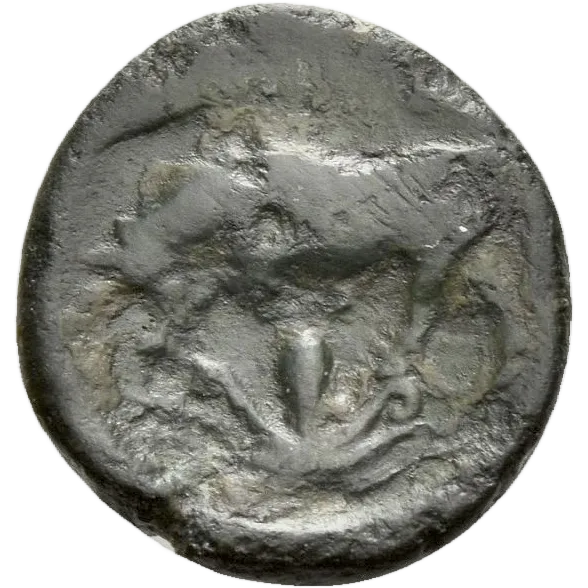
Collection of the author - view coin page
- Obverse: Poseidon advancing right, wielding trident overhead
- Reverse: Bull standing left; octopus below
A bronze drachm, c. 420–390 BCE. The same arrangement: bull in the center of the reverse field, octopus placed beneath it. At 12 mm the die gives enough room for six arms again, with the same round, finless head as on the obol.
All three issues place the octopus alongside Poseidon directly. The next two coins show the reverse type persisting when Poseidon is absent from the obverse entirely.
The Civic Reverse
The bull-and-octopus reverse was the city's standard type, and it held even when the obverse changed.
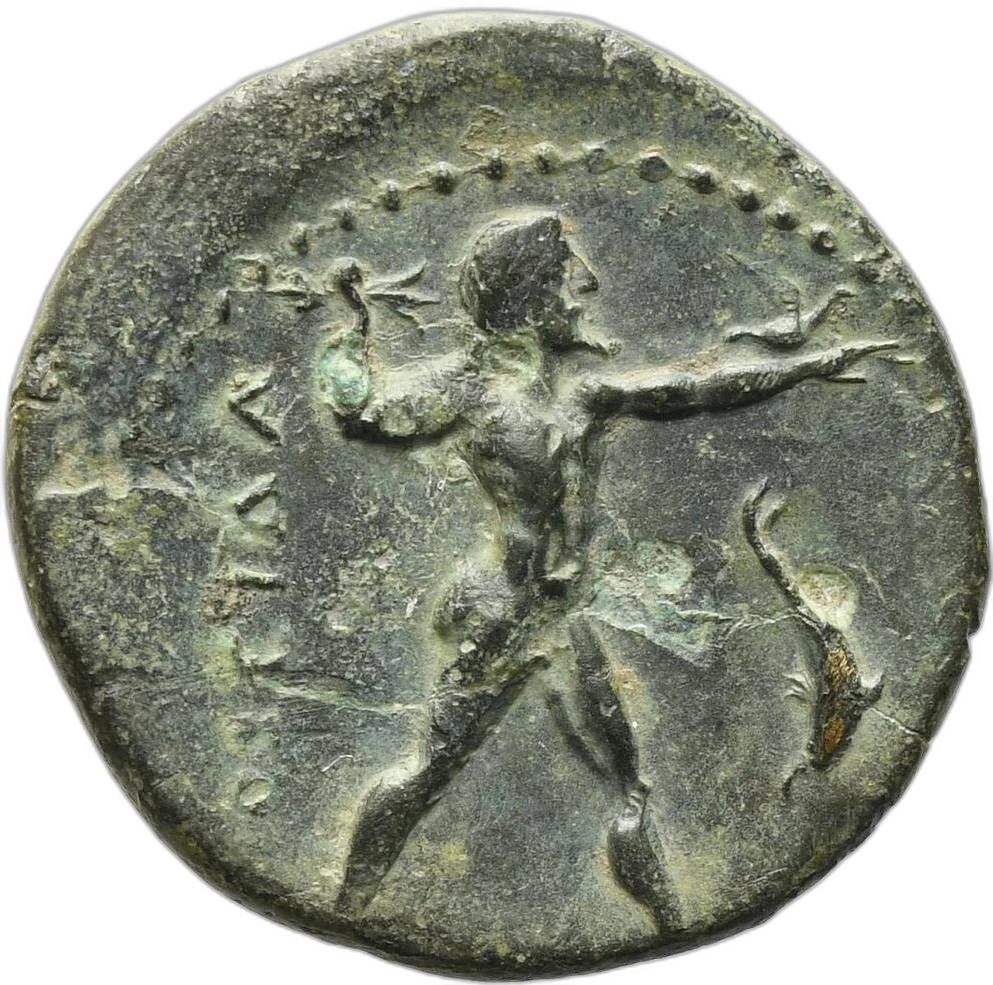
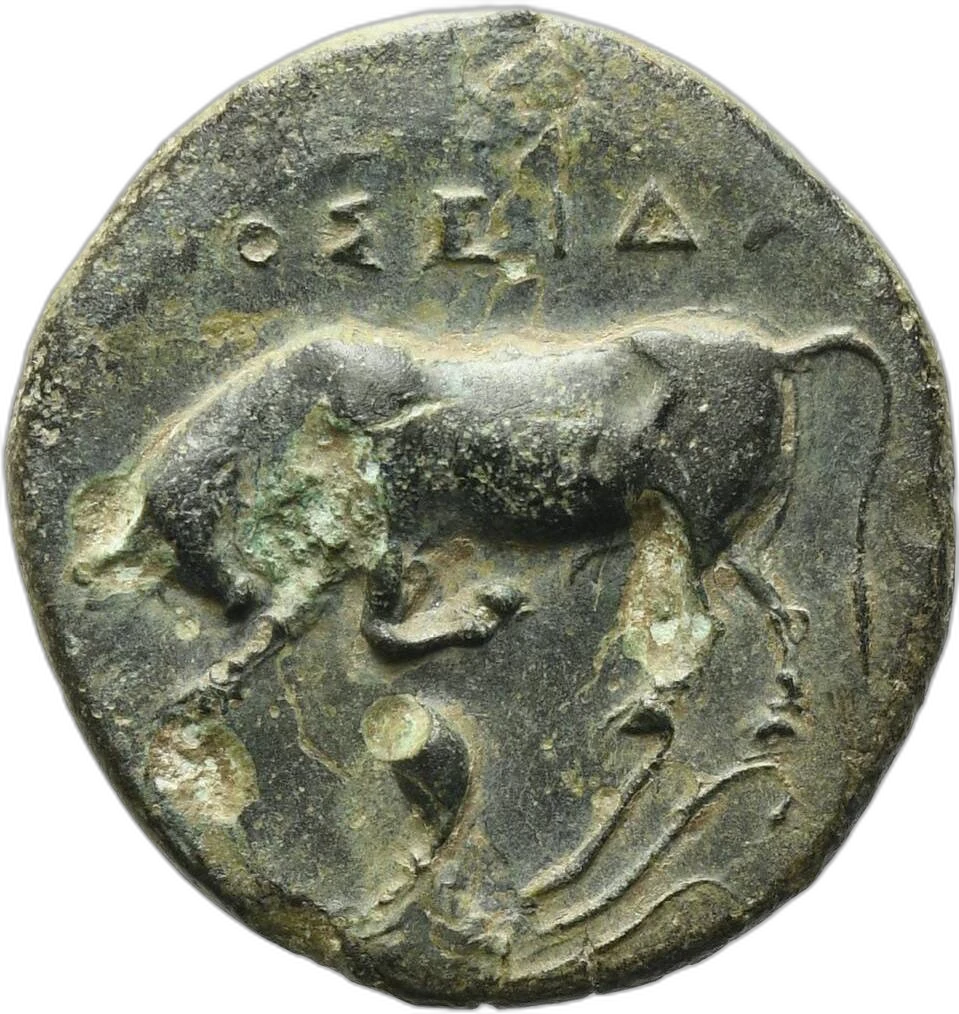
Bertolami Fine Arts, E-Auction 251 (25–26 Feb 2023), lot 59 - Numisbids
- Obverse: Zeus striding right, hurling thunderbolt; eagle on extended left hand; dolphin in right field;
- Reverse: Bull butting left; octopus below;
Bibliothèque nationale de France, Cabinet des Médailles - BnF Gallica
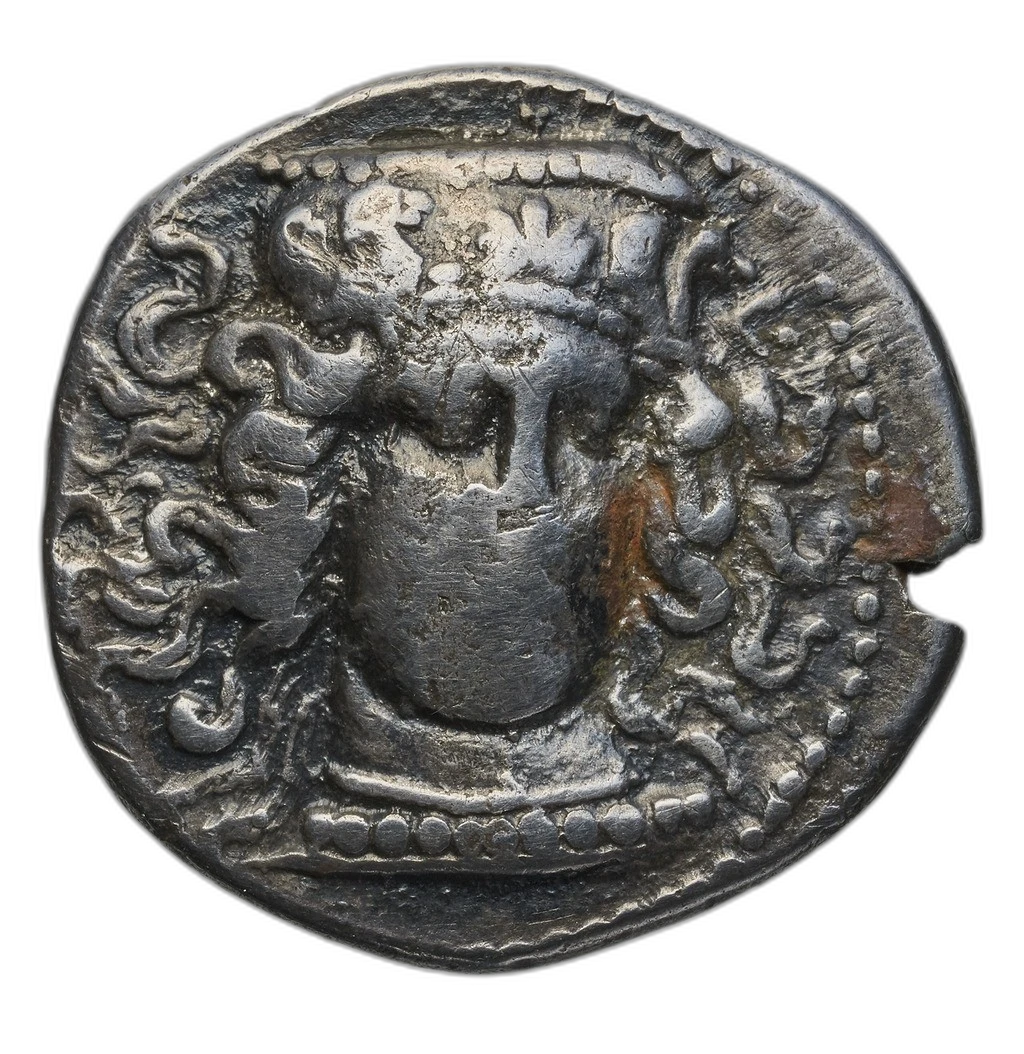
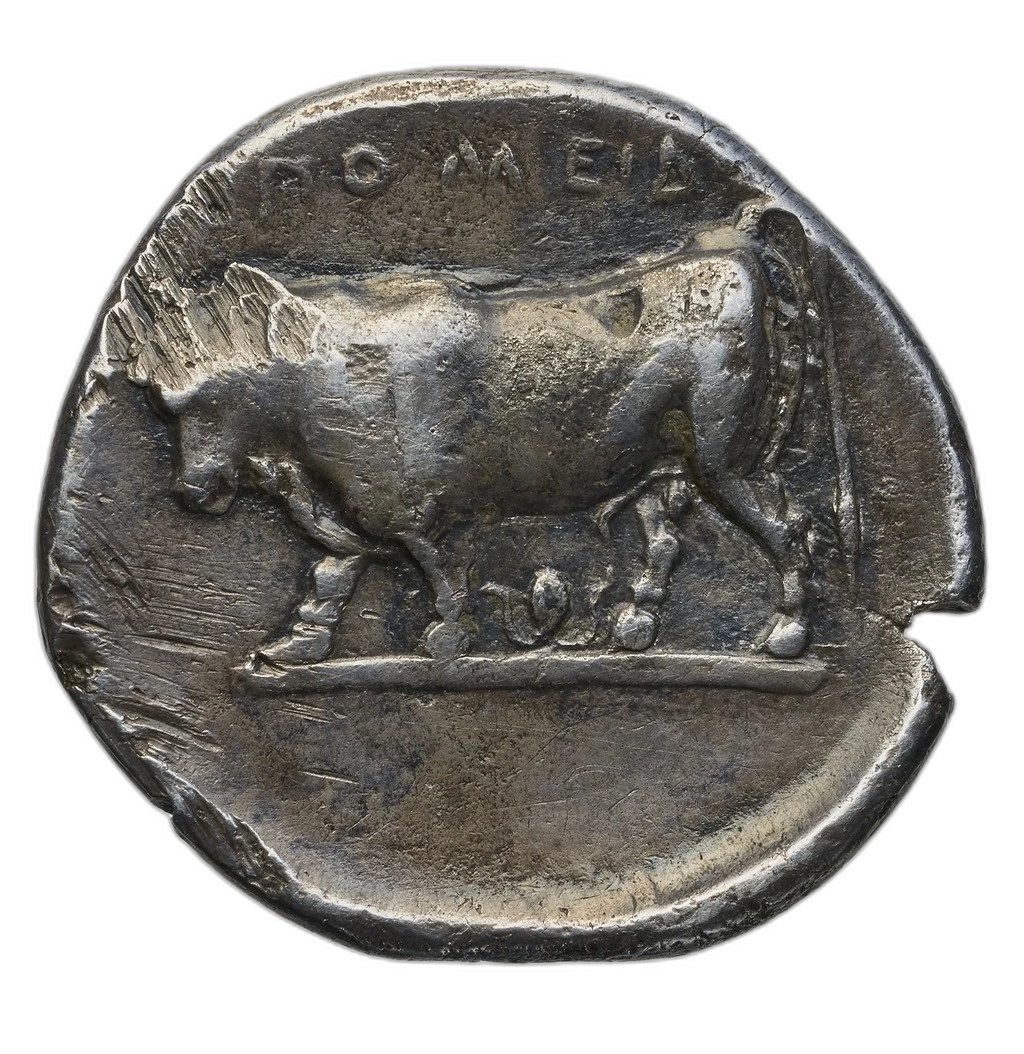
- Obverse: Hera facing, wearing polos decorated with palmettes and griffin foreparts; necklace; dotted border
- Reverse: Bull standing left; octopus below; above
The bronze (HN Italy 1154) shows Zeus rather than Poseidon on the obverse; the eagle on the outstretched hand and thunderbolt distinguish him from the trident-bearing Poseidon of the other issues. The reverse is unchanged: bull, octopus, civic legend.
The Hera coin is a fourreé stater: silver-plated over a copper core. Both known specimens are subaerated, which led Kraay to conclude it was probably not an official Poseidonian issue. He catalogued it as Kraay 21 (HN Italy 1140) in his 1967 study of the Poseidonian incuse staters. The legend on the reverse reads , using in place of the expected ; no parallel for this appears elsewhere in the Poseidonian series. Kraay identifies the creature below the bull as a cuttlefish (seppia), but the morphological criteria applied throughout this article apply here too: the head is round and finless. It is an octopus. The type is held in the Cabinet des Médailles at the Bibliothèque nationale de France (Luynes 538).
Whether or not these are official issues, the conclusion is the same: whoever produced them reproduced the bull-and-octopus reverse. That type was recognisable as Poseidonian, and the octopus was a fixed element of it.
The Plutarch Passage
Plutarch's Septem Sapientium Convivium (The Dinner of the Seven Sages) includes the legend of Enalus, whose name means "he of the sea."1 He had leaped into the sea to save a maiden chosen for sacrifice; both were rescued by dolphins and brought safely to land. Later, at Lesbos, when a great wave threatened the island and the crowd fled, Enalus alone went to meet it. Plutarch continues:
κύματος γὰρ ἠλιβάτου περὶ τὴν νῆσον αἰρομένου καὶ τῶν ἀνθρώπων δεδιότων ἀπαντῆσαι, μόνον … θαλάττῃ ἕπεσθαι πολύποδας αὐτῷ πρὸς τὸ ἱερὸν τοῦ Ποσειδῶνος. ὧν τοῦ μεγίστου λίθον κομίζοντος λαβεῖν τὸν Ἔναλον καὶ ἀναθεῖναι, καὶ τοῦτον Ἔναλον καλοῦμεν.
"For when a towering wave mounted over the island and the people were in terror of meeting it, he alone… octopuses followed him through the sea to the shrine of Poseidon; the greatest of them was carrying a stone, which Enalus received and dedicated there — and this we call Enalus."
The word is πολύποδας: octopuses, not cuttlefish.2 The largest carries a stone to Poseidon's shrine; Enalus takes it and dedicates it there. The stone itself is named after the man, likely an aetiology for a cult object at Poseidon's sanctuary on Lesbos. Plutarch records the detail without comment, treating the octopus at Poseidon's shrine as requiring no explanation.
Conclusion
The obol predates the Lucanian sack of Poseidonia around 400 BCE. The bronze straddles it; the stater's date range extends well into the Lucanian period. The octopus appears on all three, placed alongside Poseidon on the earliest small silver and tucked beneath the civic bull on later issues. It remained on the reverse even when Poseidon was replaced on the obverse by Zeus or Hera, indicating that by this stage the octopus had become a fixed element of the civic reverse type rather than functioning solely as a divine attribute.
The numismatic and literary evidence together suggest that the octopus served as a minor attribute of Poseidon at Poseidonia, one that persisted through changes of political authority and became permanently embedded in the civic reverse type. The Plutarch passage, written at Lesbos some six centuries after the last of these coins, records octopuses at Poseidon's shrine without comment. Neither source treats the connection as requiring explanation.
Footnotes
Πολύπους (πολύ, "many" + πούς, "foot") is the standard Greek word for the octopus. The plural accusative πολύποδας is what Plutarch uses. Homer employs the Ionic form πουλύπους at Odyssey 5.432–433, describing Odysseus battered against rocks in a storm sent by Poseidon, the octopus dragged from its lair with pebbles clinging to its κοτυληδόνες (suckers). Aristotle's Historia Animalium distinguishes the main cephalopods by name: πολύπους (octopus), σηπία (cuttlefish, the source of the pigment sepia, named for the ink), and τευθίς (squid, the smaller kind); a fourth term, τεῦθος, denotes the large squid. He treats the octopus at 4.1 (523b): eight feet with suckers, the animal using its tentacles as "both feet and hands" (καὶ ὡς ποσὶ καὶ ὡς χερσὶ χρῆται ταῖς πλεκτάναις). The name πολύπους, the many-footed one, is thus descriptively accurate in a way the other terms are not: σηπία refers to the ink, τευθίς and τεῦθος are of uncertain etymology. Some English translations of the Plutarch passage render πολύποδας as "cuttlefish," but σηπία and πολύπους are consistently distinct across Homer, Aristotle, and the wider ancient sources; the confusion is a translator's error with no ancient basis.
↩